Identification of potential molecular biomarkers for therapeutic response in drug-resistant oral cancer
Date:
23/6/2026
Identification of potential molecular biomarkers for therapeutic response in drug-resistant oral cancer
The Iraqi Cultural Attaché congratulates Dr. Sabrin Ali Mohammed Al-Sudani on obtaining her PhD in Biotechnology from the University of Kerala – India, following her successful identification of potential molecular biomarkers for therapeutic response in drug-resistant oral cancer.
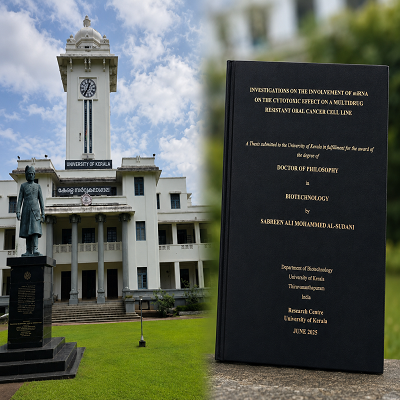
The Cultural Attaché at the Embassy of the Republic of Iraq in the Republic of India extends its sincerest congratulations and best wishes to Dr. Sabrin Ali Mohammed Al-Sudani, a faculty member at the College of Dentistry – University of Misan, on the occasion of earning her PhD degree in Biotechnology from the University of Kerala, under the scholarship program of the Indian Council for Cultural Relations (ICCR), after successfully defending her dissertation on 11 June 2026.
The dissertation was entitled:
INVESTIGATIONS ON THE INVOLVEMENT OF miRNA IN THE CYTOTOXIC EFFECT ON A MULTIDRUG RESISTANT ORAL CANCER CELL LINE
The study aimed to investigate the role of microRNAs (miRNAs) in regulating therapeutic response and identifying potential biomarkers for drug-resistant oral cancer, using a set of advanced molecular and biotechnological techniques, including the MTT assay, quantitative real-time PCR (qRT-PCR), microRNA expression profiling, and Western blot analysis.
The results showed that Flutamide achieved the highest efficacy in inhibiting cancer cell growth, followed by Cyclophosphamide, which demonstrated promising effectiveness. The findings also revealed an increased expression level of hsa-miR-186-5p by 32.82-fold, suggesting its potential use as a molecular biomarker for therapeutic response in oral cancer. Furthermore, Cyclophosphamide was found to increase the gene expression of both IL2 and C6ORF141, indicating its role in regulating immune response alongside its cytotoxic effects.
The study confirmed significant changes in gene and protein expression associated with therapeutic response, highlighting the potential clinical importance of these findings in developing future treatment strategies for oral cancer. External examiners recommended awarding the PhD degree to the researcher, praising the scientific value of the thesis and its contribution to oral cancer research and molecular medicine.
During her studies, the researcher received practical and research training at the Rajiv Gandhi Centre for Biotechnology (RGCB/BRIC-RGCB) in Kerala, India, a national research institute under the Department of Biotechnology (DBT), Ministry of Science and Technology, Government of India, and one of the world-leading centers in biotechnology and molecular biology. There, she gained advanced expertise in modern molecular techniques, gene expression analysis, microRNA studies, and molecular mechanisms related to oral cancer.
This achievement represents a distinguished scientific contribution in the field of biotechnology and oral cancer research, reflecting the importance of scientific research and academic cooperation between Iraqi and Indian educational institutions, as well as its role in supporting future studies and advancing scientific knowledge in molecular biology and medical sciences.
On this occasion, the Iraqi Cultural Attaché wishes Dr. Sabrin Ali Mohammed Al-Sudani continued success in her academic and scientific career, and hopes that her expertise and acquired knowledge will contribute to advancing scientific research and developing academic and healthcare institutions in the Republic of Iraq.
|