Scientific Achievement: Book Published by an Iraqi Doctor and PhD Student in India
Date:
29/3/2026
Book Published by an Iraqi Doctor and PhD Student in India
Scientific Achievement: Book Published by an Iraqi Doctor and PhD Student in India
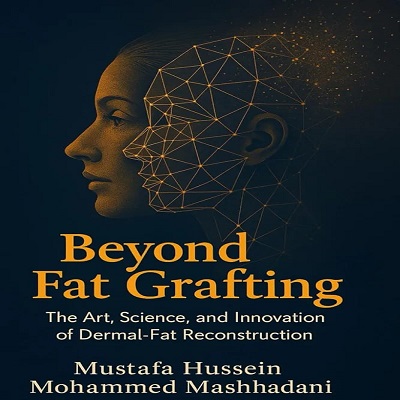
In a scientific achievement that reflects the excellence of Iraqi competencies in the fields of medicine and advanced scientific research, the Iraqi student Mustafa Hussein Mohammed Al-Mashhadani, a physician and researcher in plastic and reconstructive surgery and a PhD student in Plastic Surgery at JSS Academy of Higher Education and Research, India, has successfully published a book titled:
“Beyond Fat Grafting: The Art, Science, and Innovation of Dermal-Fat Reconstruction.”
The book presents an advanced scientific vision that redefines the role of Dermal-Fat Grafts (DFG) in reconstructive and aesthetic surgery, moving beyond the traditional concept of Autologous Fat Grafting (AFG) as merely a method for volume replacement.
The book is based on the concept that the dermal-fat graft is not merely a technical alternative, but rather an integrated tissue entity that combines biological and structural properties. The dermis provides a structural scaffold that enhances stability, improves revascularization, and reduces resorption rates compared to injected fat alone. Accordingly, the book introduces an advanced reconstructive concept that combines volumetric restoration with structural support simultaneously.
From a clinical perspective, the book reviews the applications of DFG in the repair of congenital and acquired facial deformities, including post-traumatic and post-tumor resection cases, with a focus on selecting the appropriate technique according to the characteristics of the tissue defect. It also discusses the possibility of combining DFG and AFG within hybrid approaches to achieve more precise and stable results.
The book also highlights the technical and artistic aspects, such as graft design, determining the dermis-to-fat ratio, fixation techniques, and three-dimensional sculpting methods, thereby reinforcing the surgeon’s role as a “tissue engineer” rather than merely a procedural operator. It further discusses future prospects of innovation, including modern trends in regenerative medicine and structural reconstruction.
The book concludes by presenting a conceptual shift in reconstructive surgery, emphasizing that successful outcomes depend not only on volume restoration, but also on selecting the appropriate tissue type, structure, and function, thereby establishing dermal-fat grafts as a fundamental tool in facial reconstruction.
We wish the researcher and physician Mustafa Hussein Mohammed Al-Mashhadani continued success and excellence in his scientific career, and hope that he will continue to raise the name of Iraq high in the fields of science and knowledge.
|